
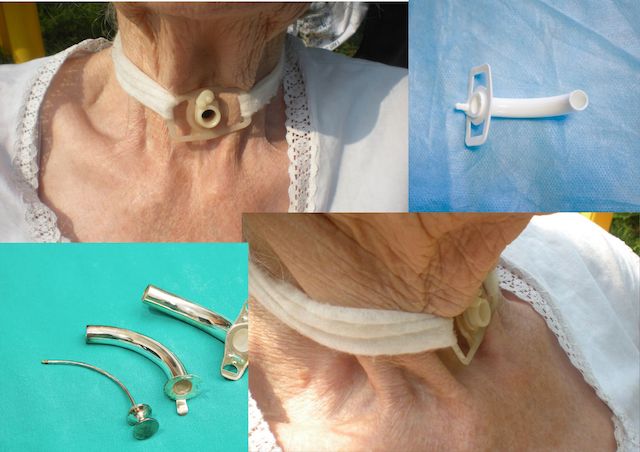
Laryngectomy is the medical term used for the surgical removal of your voice box (larynx ). Laryngectomy is almost always done for cancers involving the larynx. Removal of the larynx will alter the way you breathe and speak.
WHAT IS LARYNX

The larynx is the part of your breathing system which connect your mouth and nose to the windpipe (trachea). When you breathe in, air will go through your larynx to your trachea and lungs. When you breathe out air will travel from your lungs to the nose through the larynx.
The larynx consists of your vocal codes (voice bands ) which allow you to speak. The structure of the larynx is such that it will not allow food to enter into your airway.
Even though the larynx plays a very important role in your speech, breathing, and eating, certain cancers leave no choice for doctors other than removing your larynx (laryngectomy) . Your doctor will offer the removal of your voice box when the expected benefit outweighs all the surgical morbidity.
WHAT HAPPENS IN LARYNGECTOMY OPERATIONS?
During the laryngectomy operation, your surgeon will remove your larynx including your vocal codes ( voice bands ) your thyroid cartilage ( The Adam’s apple ), and part of your food passage.
Firstly the anesthetists will put you to sleep and the surgeon will make a cut in your neck. subsequently, your cancer surgeon or head and neck surgeon will remove your cancer with the larynx. Surgery also involves the removal of lymph nodes in your neck to prevent cancer from coming back in the lymph nodes. Once everything Is removed your food passage will be repaired and your trachea will be stitched to the neck skin to make a laryngectomy stoma (tracheostomy ).
Before completing the operation, the doctor will put one or two tubes into your neck for any fluids to come out. Surgery is concluded by stitching your skin.
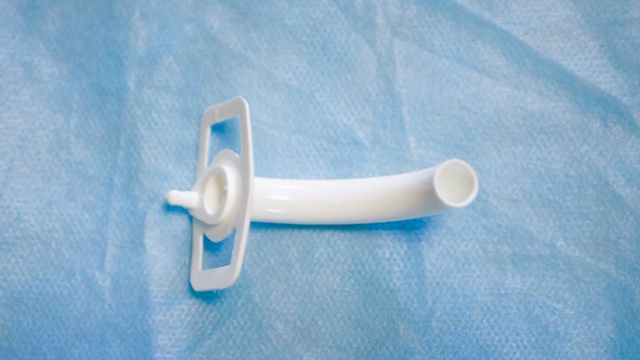
After completion, a small plastic tube (Tracheostomy tube) will be inserted into your tracheostomy.
WHAT HAPPENS IMMEDIATELY AFTER LARYNGECTOMY
Immediately after the operation, the patient will be sent to the ICU for observation for one to two days. During this period you will be given antibiotics and painkillers. The nurses will regularly suck your tracheostomy tubes to avoid blockage. Draining tubes will be taken out after a few days and your sutures will come out in 2 weeks
WHAT HAPPENS TO SPEECH AFTER THE REMOVAL OF THE VOICE BOX?
During a laryngectomy operation, your voice bands will be taken out and you will not be able to speak naturally. This sounds very disturbing. However, there are alternative ways to speak and communicate. Immediately after the operation, until an alternative method of speech is established you will have to use non-verbal communication methods which include sign language and writing.
Once you recovered from your laryngectomy operation your medical team will train you to speak without the larynx or introduce an alternative method such as electrolarynx.
HOW TO LEARN TO SPEAK AFTER LARYNGECTOMY
Speaking after a laryngectomy is not impossible but it needs training and practice. Your speech therapist will start your speech lessons before you are discharged from the hospital. There are several alternatives speaking methods for laryngectomy patients. Out of these, the most commonly used methods are
- Tracheoesophageal puncture (TEP)
- Oesophageal speech
- Electro larynx
The method most suitable to you will depend on your current health status, Type of operation you had, and your personal preference.
Tracheoesophageal puncture ( TEP)
This is the most commonly used alternative speech method for laryngectomy patients. Your surgeon will insert a small valve between your windpipe ( trachea ) and your esophagus. This will be done at the time of your first operation or as a small second operation.
To speak you have to take a deep breath and pass air through the valve into your esophagus. This is done by closing your tracheostomy with your finger or with a non-touch method using a one-way valve.
A column of air going to the esophagus is used to vibrate muscles and produce speech. With this technique you can produce near-normal speech and the technique can be learned within a few weeks.
Esophageal speech
This technique does not require any additional procedure or equipment. However, learning esophageal speech is hard and takes time and practice.
In this technique, you will have to swallow air and put it out similar to burping. The air will vibrate the upper part of your esophagus to make sound. You can use your mouth and lips to control the sound make words
Electrolaynx
Electrolarynx is a small electronic device that is used to produce voice. These are very easy to use and can be trained in a few days. These machines sense vibration and convert it to sounds.
There are two main types of an electrolarynx. The neck type is kept near the side of the neck whereas the intraoral one is kept inside the mouth when speaking.

You can carry out normal communication including telephone communications using an electrolarynx. Electrolarynxes produce a mechanical type of voice that some people don’t like.
RADIOTHERAPY WAS SURGERY
Because of the significant impact on speech, patients always ask for alternatives for laryngectomy. The best alternative for the removal of your voice box is Radiotherapy. Unfortunately, not all patients are suitable for this method of treatment. Early laryngeal cancers can be treated with radiotherapy without affecting patients’ long-term outcomes. In this method of treatment, you will be given a large dose of radiation to kill your cancer cells.
Sometimes radiotherapy is combined with chemotherapy ( cancer medicines ) to control the disease.
Very early cancers of the larynx may be removed endoscopically (by inserting a small camera through your mouth and nose) preserving your speech.
LARYNGECTOMY AFTER RADIOTHERAPY
If you develop a recurrence ( Cancer coming back ) after radiotherapy ) You can be treated with a Laryngectomy. However surgical complications are more after radiotherapy.
YOUR LARYNGECTOMY TUBE
A laryngectomy tube is a small plastic tube that is inserted into your laryngectomy stoma to facilitate breathing. These are also called tracheostomy tubes. Different types and sizes of tracheostomy tubes are available.
SHOWERING AND SWIMMING AFTER TOTAL LARYNGECTOMY
It is not advisable to swim or dive in the water with a laryngeal stoma. The water can enter into your lungs through the stoma and cause serious lung damage and infections. This creates a situation similar to drawing. If you are to swim with your tracheostomy you need to use special devices for that
Bathing with a laryngeal stoma should be done with care. A bath is preferred over a shower. keep shower gel and powder away from the stoma.
LOOKING AFTER LARYNGECTOMY STOMA
You should properly look after your laryngectomy stoma to avoid life-threatening complications. The stoma should be cleaned every morning and 2 – 3 days a week.

Dr D H Buddhika Ubayawansa ( MBBS , MD Surgery)
This article is medically reviewed by Dr Buddhika Ubayawansa a consultant onco-surgeon.
